I bought the ProsourceFit balance pad six months ago, mostly because my doctor told me that losing leg strength was the thing most likely to take my independence. I am 69, retired from 31 years on a rural mail route, and I live in Enid, Oklahoma with my wife Carol. Three winters ago I took a fall on an icy porch step. Nothing broke, but it scared me, and it is the reason I started training in our spare bedroom at 66. The balance pad came later, and I have used it nearly every day since. This is the honest version of that review, the one that tells you what nobody mentions in the product photos.
The short version: the ProsourceFit pad does what it claims, it has held up fine on carpet, and it is now a permanent part of my routine. It is also not magic. It will not fix your balance by itself, it feels odd underfoot for the first week, and a few of the exercises people suggest for it are terrible ideas for someone with a stiff knee. If you want the plain-spoken version from a guy who is not selling anything, keep reading.
The Quick Verdict
A solid, well-made balance pad that earns its place in a senior home gym, as long as you understand it is a tool, not a cure. I use mine daily and would buy it again.
Amazon Check Today's Price →The balance pad I still use every day at 69
Six months in, the ProsourceFit pad is the piece of gear I reach for most. It is soft enough for knee work, stable enough for standing exercises, and it has not worn out on my carpet. Check today's price on Amazon if you want to see current deals.
Amazon Check Today's Price on Amazon →How I Have Used It
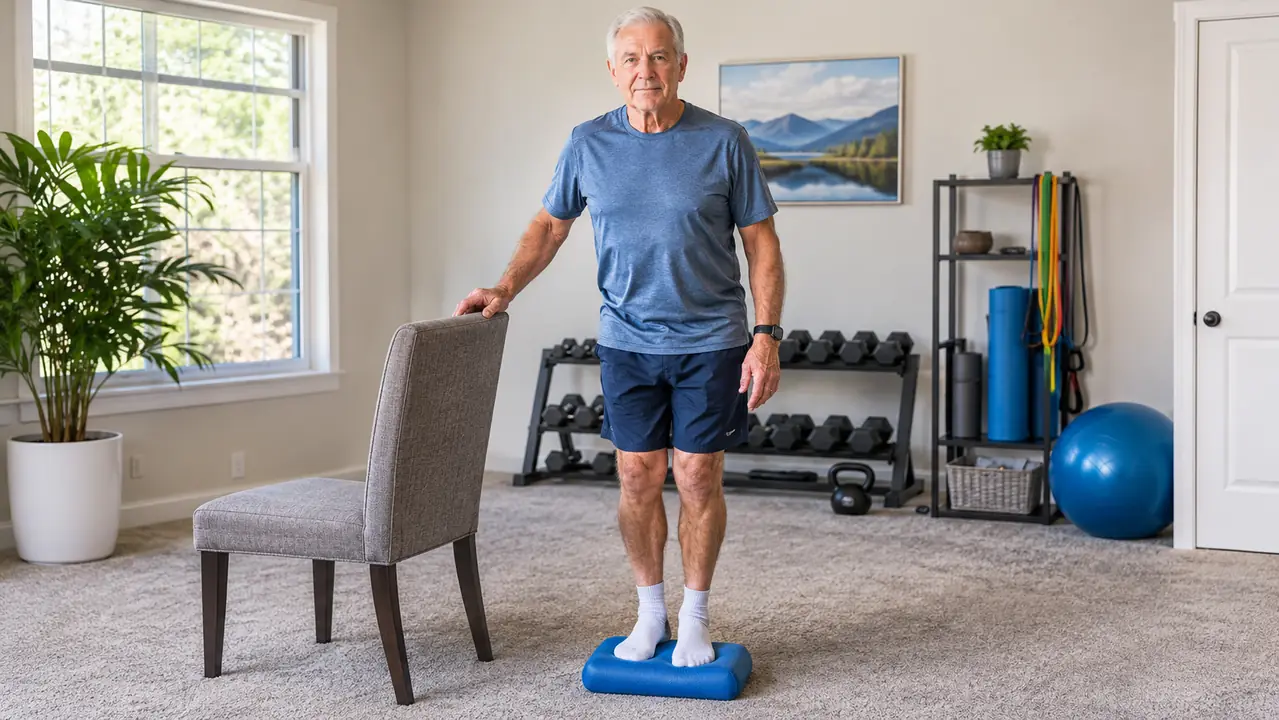
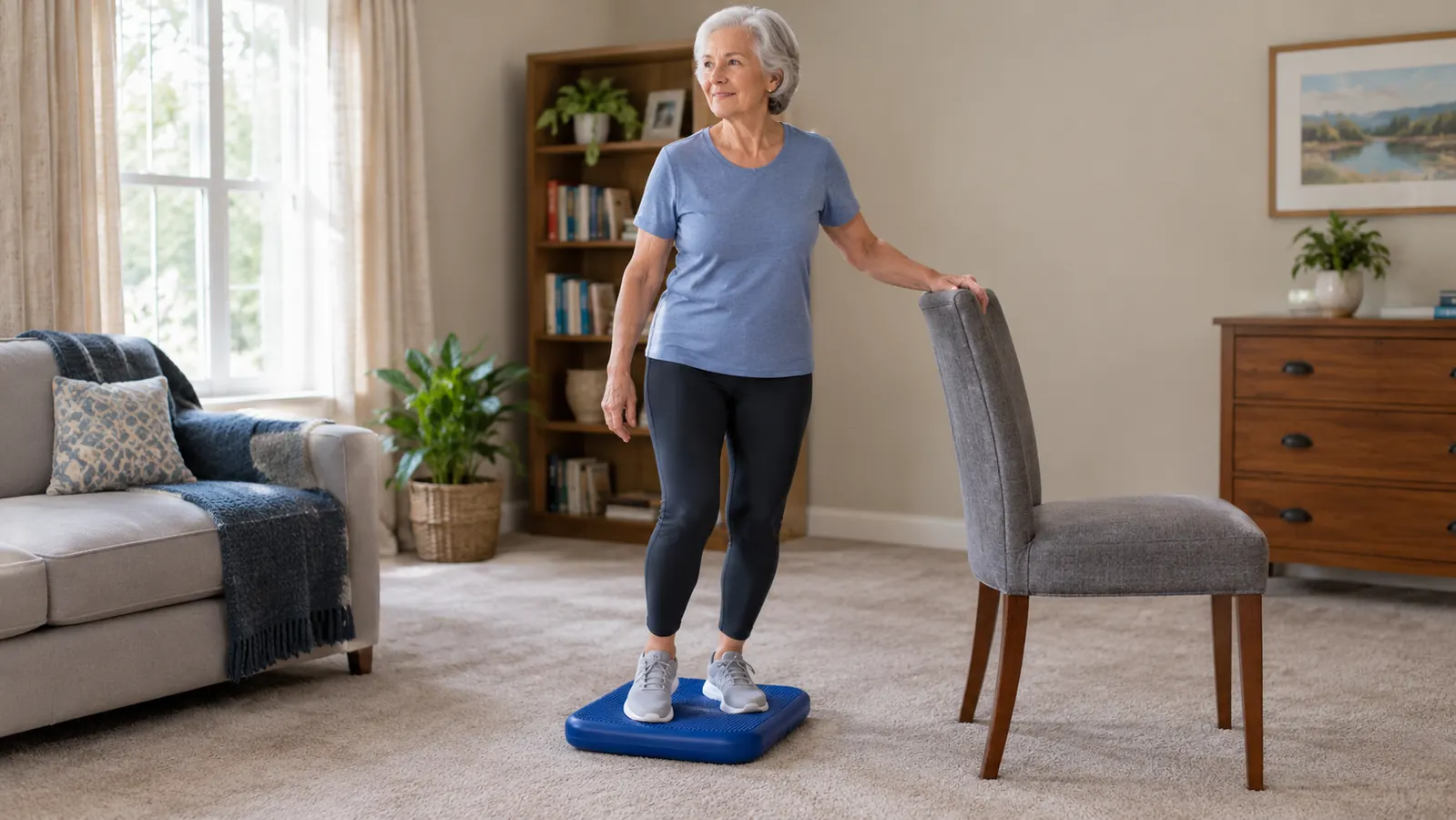
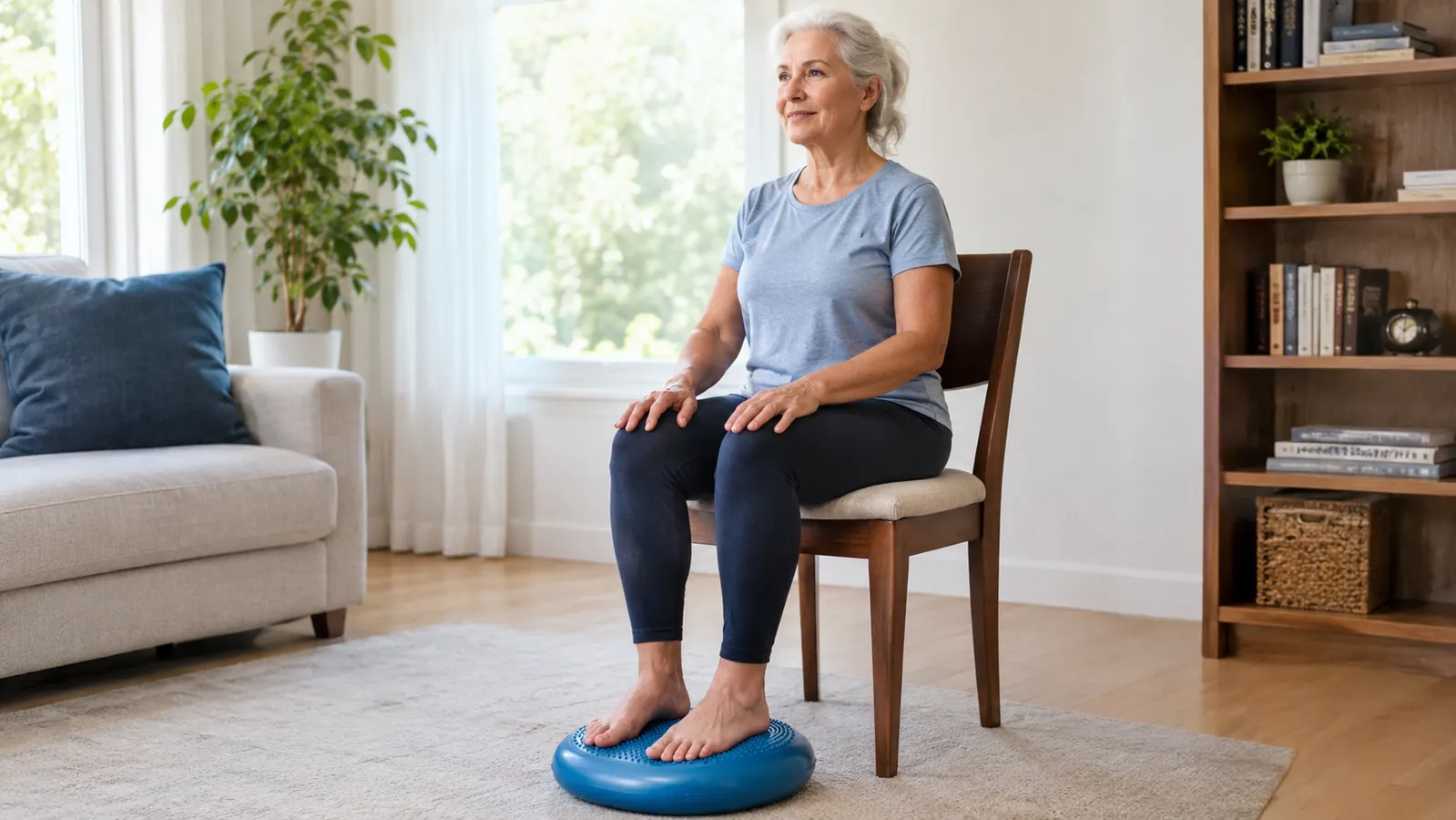
My setup is simple. The spare bedroom is about 11 by 12 feet, carpeted, with a rubber mat over part of the floor. I keep the ProsourceFit pad on the carpet next to a sturdy kitchen chair that I use for support. Most mornings I do ten minutes on it before my dumbbell work: heel raises, gentle side-to-side weight shifts, and single-leg stands with one hand on the chair. The first morning I used it, I stepped on barefoot and my ankles wobbled hard enough that I grabbed the chair back without thinking. By the second week that grab had turned into a light touch, and by the third month I barely touched the chair at all. I still keep the chair where it is. It costs nothing to leave it there, and it is the difference between a wobble and a fall. Carol, my wife, uses it a few times a week too, sometimes while seated, with both feet on the pad and her hands on her knees.
In six months I have missed maybe a dozen days. The pad has been stepped on, stood on, kneeled on, and once accidentally left out where I nearly tripped over it in the dark. That last one is my fault, not the pad's. The surface still looks like new, the texture has not worn smooth, and it does not slide on the carpet. I cannot speak to how it behaves on hardwood or tile because I do not have either in my house, but on carpet it stays put.
The first week was genuinely strange. Your ankles and feet are used to a flat, solid floor. Standing on a squishy pad makes your calves and shins work in ways they have not worked in years. I felt it in muscles I did not know I had, and I had to hold the chair for the first several sessions. That is normal. If you try the pad and feel unsteady at first, that is the pad working, not a sign that you are doing something wrong.
What Nobody Tells You Before You Buy
Here is the part the product page leaves out. First, the pad is firmer than it looks in photos. I expected something almost pillow-soft, and it is not. It has give, but it is dense, and that is actually a good thing for balance work. A marshmallow-soft pad would be useless. Second, it has a faint rubbery smell when it arrives. It faded within a few days in my spare bedroom, but it is there, and I would not want it right next to my bed. Third, the pad is not a substitute for strength work. It trains your ankles, feet, and the small stabilizer muscles, but it will not build the big leg muscles that actually catch you when you trip. I use it alongside dumbbell squats and step-ups, not instead of them.
The fourth thing is the one I wish someone had told me: the pad makes balance exercises harder before it makes them easier, and that is exactly the point. If you can already stand on one leg on a hard floor without wobbling, the pad will show you how much work your ankle still has to do. That is not a flaw. That is the exercise. I remember the morning it clicked. I had been on the pad about three weeks, doing my usual heel raises, when I looked down and realized I was standing on one leg with only my fingertips on the chair. I had not planned it. My ankle had simply gotten stronger without me noticing. The next day I tried a single-leg stand on the hard floor and held it for fifteen seconds, which I could not have done the month before. That was the first time I believed the pad was actually doing something. My left knee has mild osteoarthritis, so I have to be careful with how I bend it on the pad. I keep my movements small and I always have the chair within reach. If you have knee trouble, start seated or with both feet planted before you try anything fancy.
What I Liked
- Firm, dense foam that supports a 190-pound man without bottoming out
- Stays put on carpet
- Texture has not worn smooth after six months of daily use
- Light enough to move with one hand
- Works for seated exercises, so Carol and I both use it
Where It Falls Short
- Faint rubbery smell for the first few days
- Feels unsteady underfoot for the first week
- Picks up dust and needs a wipe-down every couple of weeks
- Does not build the big leg muscles that catch you in a fall
The Exercises I Actually Do
I am not a physical therapist, and I am not going to pretend to be one. These are the moves that work for me, and I would encourage anyone reading this to clear them with their own doctor or PT before starting. The first is the simplest: stand on the pad with both feet, hold the chair with one hand, and shift your weight slowly from heel to toe, then side to side. I do this for two minutes as a warm-up. It sounds too easy to matter, but it wakes up the ankles and gets the day started.
The second move is a heel raise. Both feet on the pad, hands on the chair, rise up onto the balls of your feet and lower slowly. I do three sets of ten. This one works the calves, which matter more for balance than most people realize. The third is a single-leg stand. I hold the chair with one hand, lift one foot an inch off the pad, and try to hold for twenty seconds. Some days I can do it without touching the chair. Some days I cannot. I do not beat myself up about the bad days. One morning last month my left knee was stiff after a long day of yard work, and twenty seconds felt like a hundred. I dropped to ten seconds, kept my hand on the chair the whole time, and called it a win. The next morning I was back to twenty. That is how this works: you take what the day gives you, and you show up anyway.
The fourth move is the one Carol likes, and it is a good one for anyone who is not steady on their feet yet. Sit in a sturdy chair, place both feet on the pad, and press down gently with first the balls of your feet, then the heels, then the outside edges. It looks like nothing, but it wakes up the small muscles in the feet and ankles without any risk of falling. We do this while watching the evening news, which is about the easiest way to get exercise into a day that I have found.
The pad makes balance exercises harder before it makes them easier, and that is exactly the point.
How It Has Held Up Over Six Months
I have put this pad through real use, not the kind of use that happens in a product photo shoot. It has been stood on in bare feet and in the running shoes I wear for my dumbbell work. It has been kneeled on when I do floor exercises. It has been left in the sun by the window for a few afternoons, which I do not recommend, and it still looks fine. I also dropped a five-pound dumbbell on one corner by accident during a set, and the foam took the hit without a mark you can see. I checked that corner that evening expecting a dent, and there was nothing there. The texture on the surface has not worn away. The edges have not curled. The pad does not slide on my carpet, and it has not flattened out from my weight. I weigh about 190 pounds, and it supports me without bottoming out.
The one thing I will note is that the pad picks up dust and pet hair. We do not have pets, but the spare bedroom still collects dust, and the textured surface grabs it. A quick wipe with a damp cloth every couple of weeks keeps it looking new. One Saturday I wiped it down with a drop of dish soap and left it to dry on the back porch for an hour. It came back looking like the day it arrived. That is not a complaint, just a thing nobody mentions in the reviews. The ProsourceFit pad is also lighter than I expected, which is a good thing when I move it from the floor to the closet. It is easy to carry with one hand.
I have read reviews from people who use the pad on hardwood and tile, and they say it stays put there too. I cannot confirm that from my own experience, but the bottom of the pad has a grip pattern that seems designed for it. What I can confirm is that it has not developed a permanent dent where I stand, which is more than I can say for the cheap mat I used before I bought it.
What It Will Not Do
Here is where I have to be honest in a way that might cost the affiliate a sale. A balance pad will not prevent falls by itself. The research is clear that fall prevention comes from a combination of leg strength, balance training, and good habits like clearing trip hazards and getting your eyes checked. The ProsourceFit pad is one tool in that kit, not the whole kit. If you buy it expecting to be fall-proof in a month, you will be disappointed.
It also will not fix a specific medical issue. If you have vertigo, inner ear problems, or a neurological condition, a squishy pad is not the answer, and in some cases it could make things worse. That is not a knock on the product. It is a reason to talk to a professional before you start. My doctor was clear with me: balance training helps, but it has to be the right kind for your body. What works for my stiff knee might not work for someone else's back or hips.
And finally, it will not replace the work. The pad is a tool that makes simple exercises harder, which is exactly what you want. But you still have to show up and do the exercises. I do mine most mornings, and I notice the difference on the days I skip. My balance is better than it was six months ago, but it is better because of the routine, not because of the foam.
Who This Is For
This pad is for anyone over 60 who wants to work on balance at home without buying a machine. It is for the person who has already talked to their doctor about fall prevention and wants a simple, inexpensive tool to add to their routine. It is for the person who is steady enough to stand at a counter or chair and wants to make their daily standing a little more useful. It is also for people who sit a lot and want to wake up their feet and ankles without getting on the floor.
It is especially good for couples, because one pad serves two people. Carol uses it seated while I use it standing, and we both get something out of it. At this price, that is a lot of value. If you are already doing physical therapy exercises and your therapist has suggested a balance pad, this is a perfectly good one to buy. I would not overthink the brand comparison. The ProsourceFit pad is well made, and I have no reason to believe you would wear it out.
Who Should Skip It
Skip this pad if you are looking for a cure for a diagnosed balance disorder. That is a medical problem, and it needs a medical answer. Skip it if you are not willing to use it regularly, because an unused balance pad is just a squishy piece of foam taking up space in the closet. And skip it if you have a condition that makes standing on an unstable surface risky, unless your doctor or physical therapist has specifically cleared you for it.
I would also say skip it if you want something that will challenge your balance hard. The pad is a gentle challenge, which is exactly right for most older adults, but if you are already a confident single-leg stander on a hard floor, you might find it too easy. In that case, a wobble board is probably a better fit. I tried a friend's wobble board once, and it was a different animal entirely. The ProsourceFit pad is the starting point, not the finish line.
Six months in, I would buy it again
The ProsourceFit balance pad is a simple tool that does its job. It has held up, it stays put on carpet, and it is part of my morning routine. If that sounds like what you are looking for, check today's price on Amazon.
Amazon Check Today's Price on Amazon →