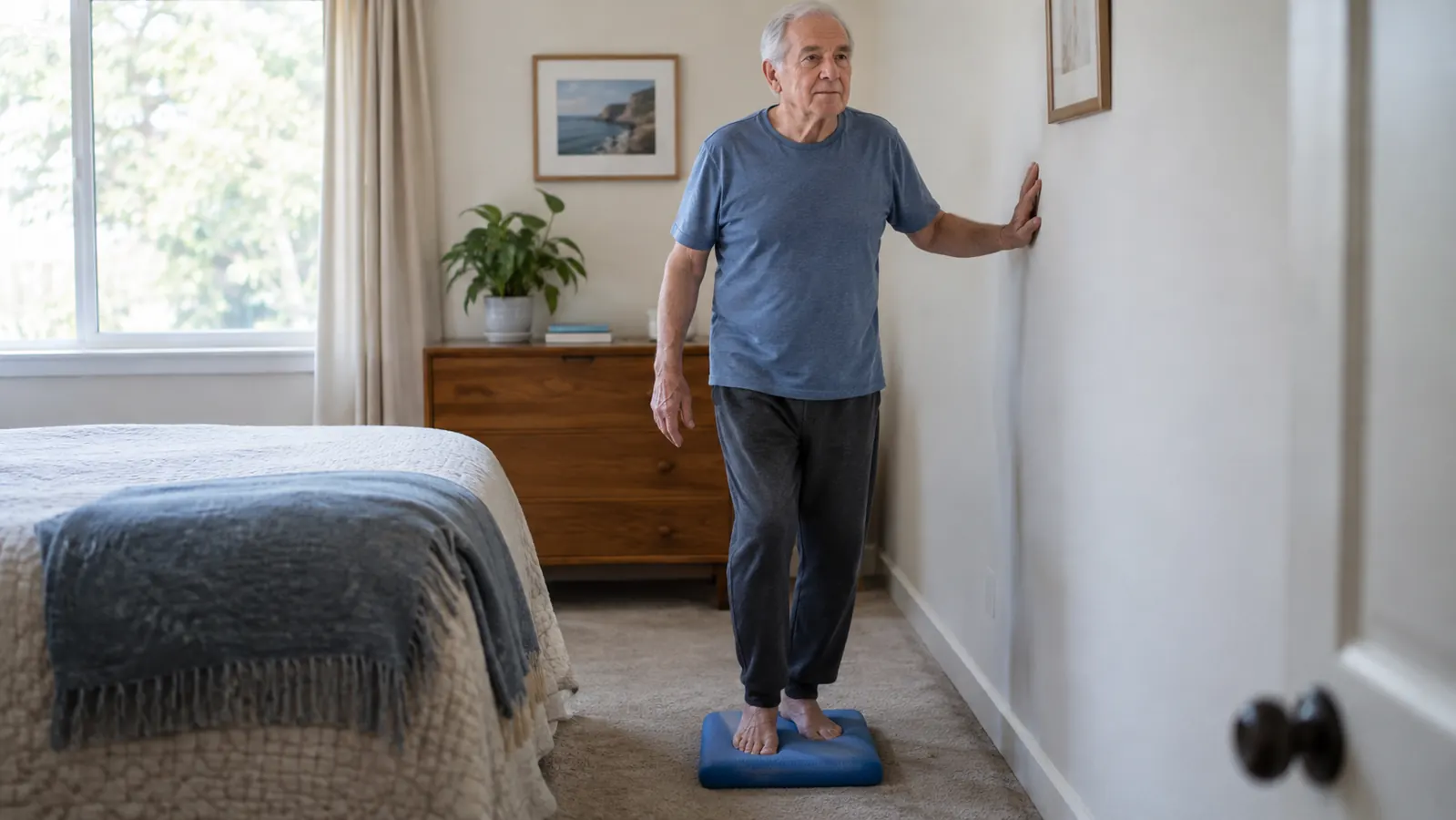
My doctor gave me a warning three winters ago that I still think about most mornings. He said the thing most likely to take my independence was not my heart and not my back. It was a fall. I was 66 at the time, a retired rural mail carrier in Enid, Oklahoma, and I had just slipped on an icy porch step. Nothing broke, but it scared me. That winter I started working on leg strength and balance in the spare bedroom, and it has been about three years now. The balance work is the part I nearly gave up on, because the first tool I tried was wrong for me.
I tried a friend's wobble board once, and I spent the whole minute gripping the wall. It was too much, too fast, and it told me something useful: I did not need a harder balance challenge, I needed a gentler one. So I bought a ProsourceFit balance pad, a flat foam pad you just stand on, and it turned out to be exactly where I needed to start. Six months later it is still the piece of gear I use most days, and it is the one I would recommend to anyone my age who asks. That is the short answer. The long answer is the rest of this article.
| ProsourceFit Balance Pad | Wobble Board | |
|---|---|---|
| Cost | Usually the cheaper of the two, and easy to replace if it wears out | Usually costs more for a solid one that will last |
| Ease of use | Stand on it and go, nothing to set up or learn | Needs practice before it feels safe |
| Safety for seniors | Soft foam, low to the ground, forgiving when you wobble | Hard surface, more tilt, harder landing |
| Challenge level | Gentle, steady progression over months | Demanding from day one, rewards strong ankles |
| Ankle and foot strength | Builds it gradually with low risk | Builds it faster, with more risk |
| Physical therapy use | A standard tool in PT clinics for controlled rehab | More of an athletic training tool |
| Storage | Lies flat or stands against a wall | Rigid, needs a permanent spot |
| Best for | Adults 60 and older rebuilding confidence after a scare | Younger, stronger people who need a bigger challenge |
How I Compared Them
I did not set up a lab. I set up a routine. For six months I have used the ProsourceFit pad nearly every day, usually for a few minutes at a time while I watch the news or while Carol reads in the armchair beside me. I have stood on it with both feet, with one foot when my knee cooperates, and with my eyes closed when I am feeling steady. I have also tried my friend's wobble board once, long enough to know exactly what it asks of you. That is the whole test: real use, over time, at my age, on a carpeted bedroom floor.
One thing I want to be clear about before I go further. I am not a doctor or a physical therapist, and I am not going to tell you what to do with an injury or a diagnosis. If you have a condition that affects your balance, ask your own physician or PT before you buy anything. What I can give you is a plain comparison between two tools, based on what they actually felt like under my feet, and which one I would choose again.
What the Pad Actually Feels Like
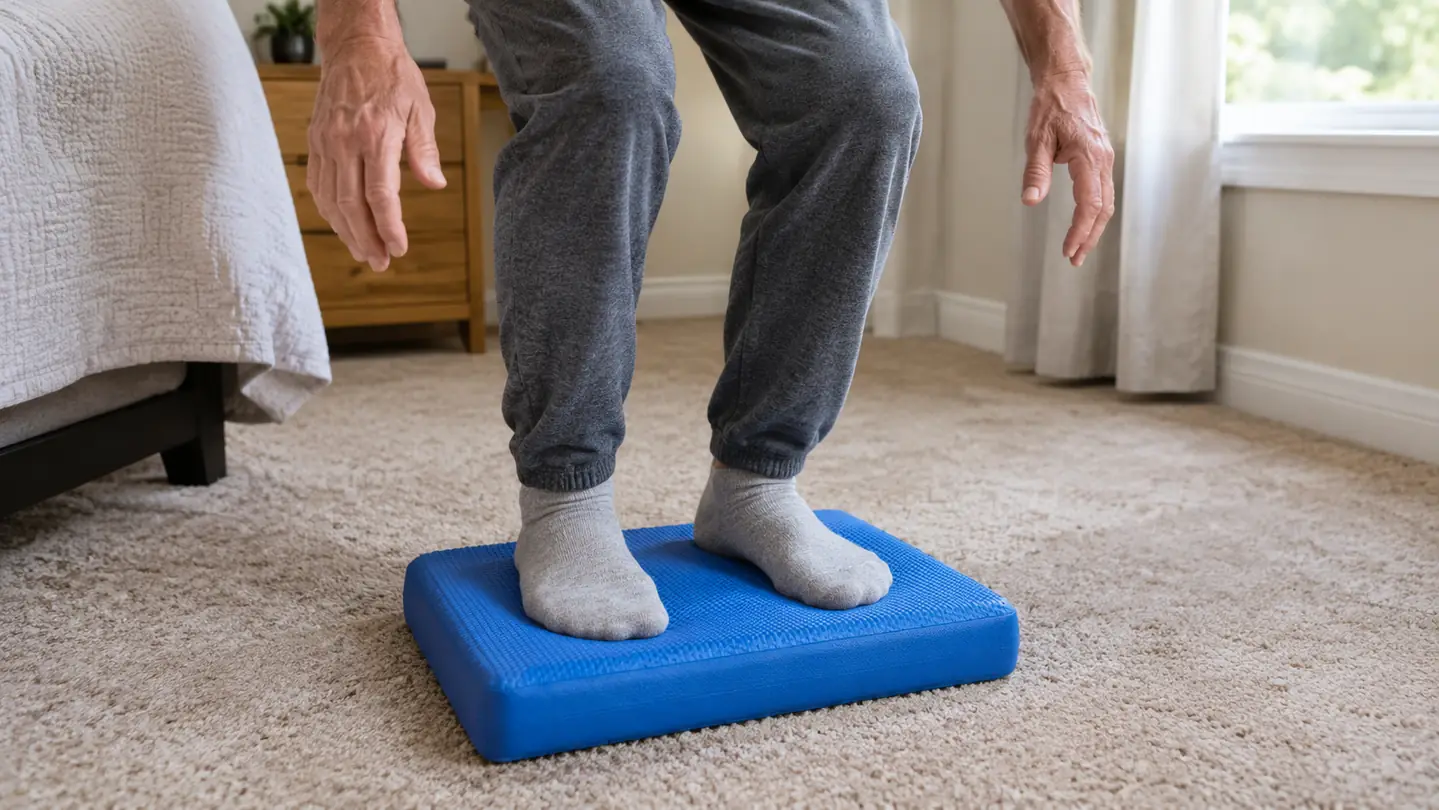
The first time I stood on the ProsourceFit pad, I expected to wobble. I did not. The foam is soft enough to sink into just a little, and that little bit of give is what makes it feel safe. It is not like standing on a balance beam or a board. It is like standing on a very thick bath mat that happens to be unstable if you push it. Your feet feel the surface, your ankles start doing small corrections, and none of it happens fast enough to scare you.
Over six months, that has been the whole experience. Some days I notice nothing. Other days I can feel my left ankle working harder than my right, which is exactly the kind of information I want, because that is the side connected to my stiff knee. The pad does not fix the knee, and I do not expect it to. But it gives me a safe way to keep that whole chain of muscles working without loading the joint the way a wobble board would.
Where the ProsourceFit Balance Pad Wins
The biggest difference is forgiveness. The pad is soft foam, and when you start to wobble, the pad wobbles with you. It damps the movement instead of amplifying it. The board tilts hard and fast, and a hard fast tilt is exactly what I do not need with a stiff left knee and a lower back that complains if I sit too long. On the pad, a small mistake costs me nothing. On the board, a small mistake is the whole event.
The pad also wins on the things that decide whether a tool actually gets used. It is quiet, so I can stand on it while Carol reads in the armchair beside me. It is soft enough to use barefoot, which I prefer. It needs no assembly and no special spot. Mine lies flat on the carpet in the spare bedroom, and when Carol wants the floor for her own routine, I stand it against the wall. A wobble board is a rigid piece of wood or plastic that needs a permanent home, and it makes a racket when you drop it.
One more point in its favor: it is the tool a physical therapist would actually hand you. You see balance pads in PT clinics all the time, because they are a controlled way to challenge someone without putting them at risk. The wobble board is more of an athletic tool. That difference matters more the older you get. I want the tool designed for rehab and prevention, not the one designed for performance.
There is also the question of confidence, and I do not think people give it enough credit. A tool that makes you nervous is a tool you will avoid. The pad never made me nervous, so I kept using it, and using it is what built the confidence. The wobble board made me nervous in the first ten seconds, and I knew right then that I would not come back to it. For someone my age, that feeling is not a small thing. It is the whole ballgame.
The pad damps the wobble. The board amplifies it. At 69, I know which one I want under my feet.
Where the Wobble Board Wins
I am not going to pretend the wobble board has nothing going for it, because it does, and a comparison that says otherwise is not worth your time. If your balance is already good and your ankles are strong, a wobble board gives you a much harder workout in a much smaller package. It builds ankle and foot strength faster than a pad ever will, because it has to. The board tilts in every direction, and your ankles do all the work to keep you centered. That is real training, and it is harder than anything I have done on the pad.
It is also the reason I do not own one. The same speed that makes it effective makes it unforgiving. My friend who owns the board is twenty years younger than me and plays pickleball twice a week. For him, the board is the right tool. For me, it is a lot of risk for not much reward. If you are younger, stronger, or further along in your balance work than I am, the wobble board deserves a real look. It just is not where I would start, and it is not where I would tell a 65-year-old neighbor to start either.
The gentler tool that actually gets used
The best balance tool is the one you will still be standing on six months from now. The ProsourceFit pad is soft enough to trust, simple enough to use daily, and it is the piece of gear I reach for before every workout. If you are trying to decide between the two, this is the side I would land on.
Amazon Check Today's Price on Amazon →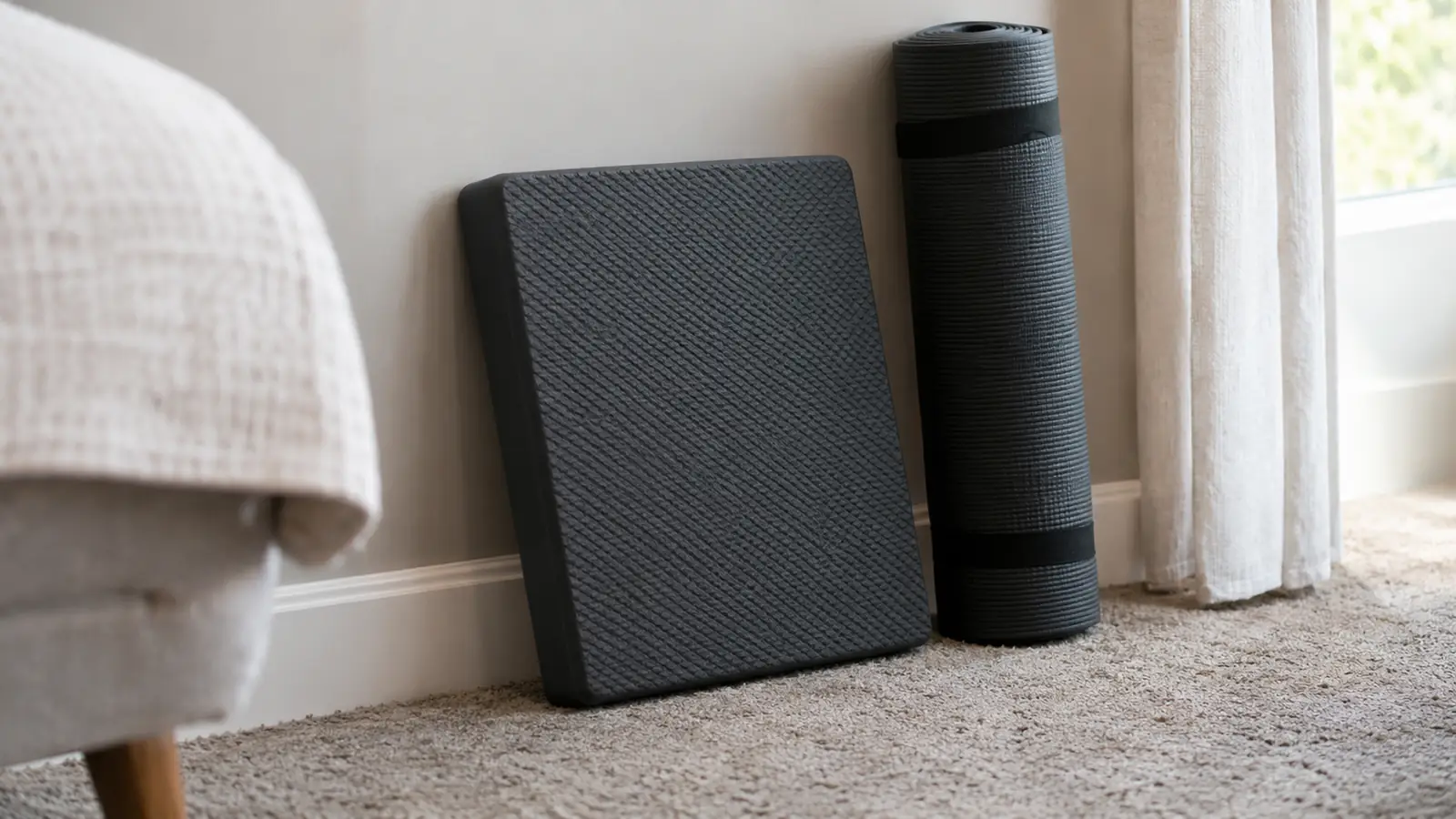
The Part Nobody Mentions
Here is what nobody tells you in the product listings. A balance pad is not a fix, and it is not a wobble board in disguise. It will not make you a gymnast, and it will not turn a weak ankle into a strong one overnight. What it does is give you a safe place to practice the skill that actually prevents falls: catching yourself. Every time you wobble on the pad and recover, you are rehearsing the exact movement you need on an icy step or a loose rug. That is the whole point, and it is boring on purpose.
The other thing nobody mentions is that the pad rewards consistency, not effort. I do not do dramatic workouts on it. I stand on it while I brush my teeth. I do a few slow single-leg stands when my knee is happy. I close my eyes for ten seconds at a time when I am feeling steady. None of it looks impressive. But my balance has improved enough that I notice it when I walk the uneven ground behind the house, and Carol has started using the pad herself a couple of times a week. That is the result you are actually after.
What I Actually Do With It
People ask what a 69-year-old does with a balance pad, so here is my actual routine. Most mornings I stand on it with both feet while I brush my teeth, which sounds like nothing until you try to keep your hips level for two full minutes. Then I move to the rubber mat, do a few slow squats holding the back of a chair, and come back to the pad for the part that matters: single-leg stands. I start with my right leg, my good one, and I hold for as long as I can without grabbing the wall. Then I switch to the left, the knee side, and I am happy with ten seconds.
In the evening, usually while Carol reads, I do the eyes-closed version. Both feet on the pad, hands at my sides, eyes shut, and I just let my ankles do the work. Ten seconds feels like a long time with your eyes closed on a soft surface. I do not push it. The point is not to impress anyone. The point is to give my body regular practice at catching itself, so that when the ground does something unexpected, the correction happens without me thinking about it.
Who Should Buy Which
Buy the ProsourceFit balance pad if you are 60 or older, if a fall scared you, if your doctor mentioned balance, or if you want something you can use barefoot on carpet without thinking hard about it. Buy a wobble board if you are younger, if your balance is already solid, or if a physical therapist tells you that you need more challenge than a pad can give. And if you are honestly not sure, ask. I am not a doctor, and I do not play one in this article. I can only tell you what worked for me and what did not.
For most people my age, the pad is the better first purchase, because the risk is low and the habit is easy to keep. The wobble board is a second-step tool, the kind of thing you move to after months of pad work, if you ever need to. There is no shame in that order. I wish more advice for seniors admitted that the gentle tool is often the effective one. The goal is not to look athletic on a piece of gym equipment. The goal is to still be steady on your feet when you are 80, and the tool that gets used daily is the tool that gets you there.
If you already own a wobble board and it is collecting dust, the pad is not a replacement you have to choose between. You can keep the board for the days when you feel strong and use the pad for the days when you do not. But if you are buying your first balance tool, or if you are buying one for a parent, start with the pad. It is the easier sell, and the easier sell is the one that becomes a habit.
One more thing, and I mean it. The tool matters less than the habit. The pad works because I stand on it most days, usually for two or three minutes at a time, and because it is the one piece of gear in my spare bedroom that never feels like a chore. A wobble board might be the right tool for someone else. For me, the ProsourceFit pad is the one that stuck, and six months in, that is the comparison that actually counts.
Start where the risk is low
The ProsourceFit balance pad is the lowest-risk way I found to rebuild balance at home. It is soft, it is simple, and it is the one piece of gear I would not trade. See what it costs today and decide for yourself.
Amazon Check Today's Price on Amazon →