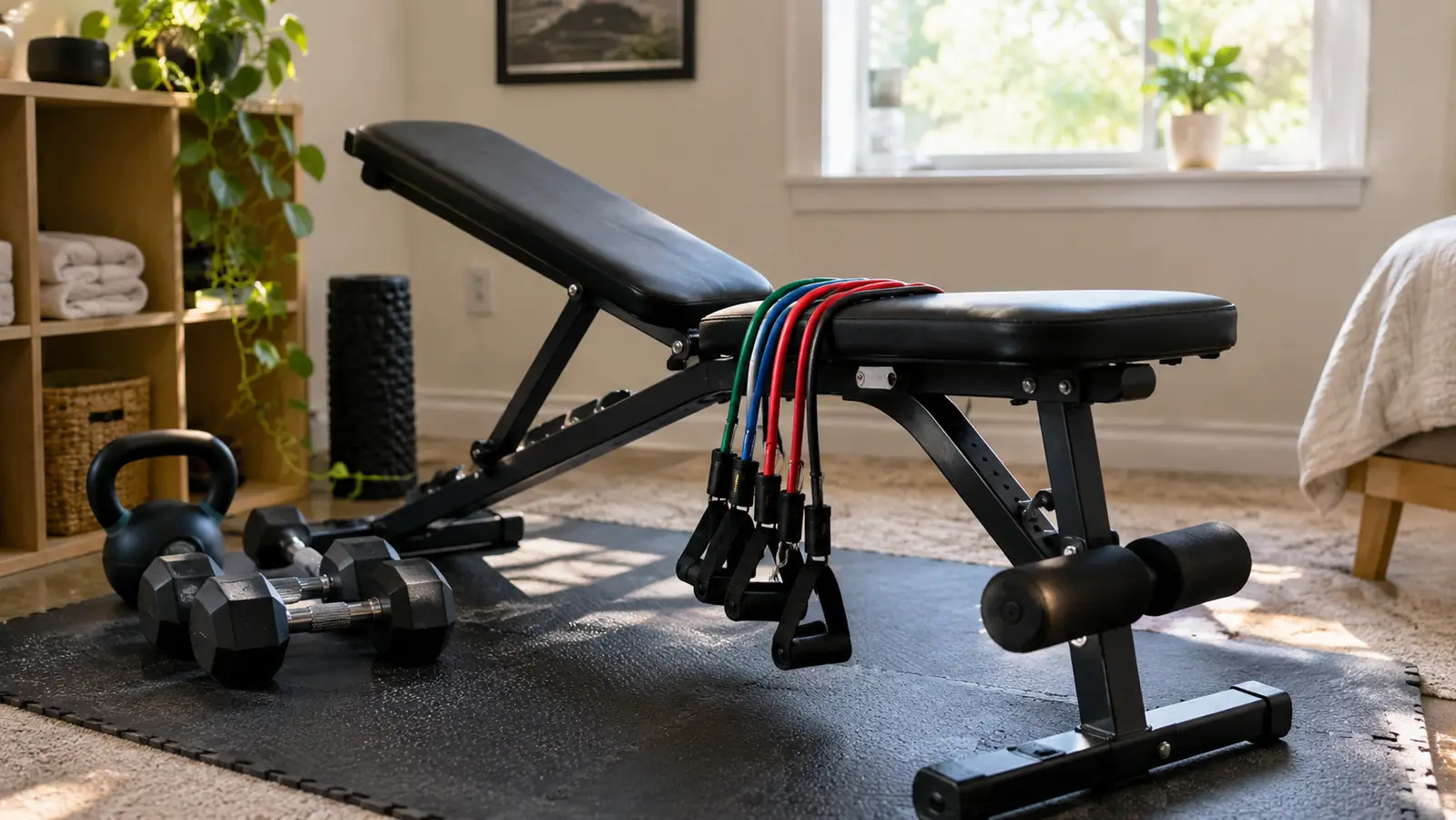
Three winters ago, my doctor told me something that stuck with me. He said the thing most likely to take my independence wasn't my heart or my blood pressure. It was losing leg strength. I was 66 then, a retired rural mail carrier in Enid, Oklahoma, with a stiff left knee that had mild arthritis and a lower back that complained if I sat too long. That conversation, plus a fall on an icy porch step that winter, is what got me started on a small home gym in our spare bedroom. I didn't want to end up housebound because I couldn't get off the couch.
I spent my first two years or so doing bodyweight moves and using a rack of fixed garage-sale dumbbells. About fourteen months ago I added a set of WHATAFIT resistance bands with handles, and they've become the piece of gear I reach for most on days my knee acts up. Here are ten reasons they've been so gentle on aging joints, in the order I noticed them. None of this is medical advice, so check with your own doctor or physical therapist before you start.
Start gentle with WHATAFIT resistance bands
If you're over 60 and want to build leg strength without loading your knees, these bands let you start light and progress slowly. That's exactly how I did it.
Amazon Check Today's Price on Amazon →They let you start with almost no resistance
The lightest band in the WHATAFIT set starts easy and only gets harder as you stretch it. That mattered to me because my left knee was the limiting factor, not my willingness to work. I could do a seated row or a shoulder press with the light band and feel the muscle working without my joint complaining. You can't do that with a heavy dumbbell. The low starting point is what made me willing to actually use them every day. It took the fear out of the first few weeks, and it let me build a habit before I added any real tension.
The resistance builds gradually, not in a jump
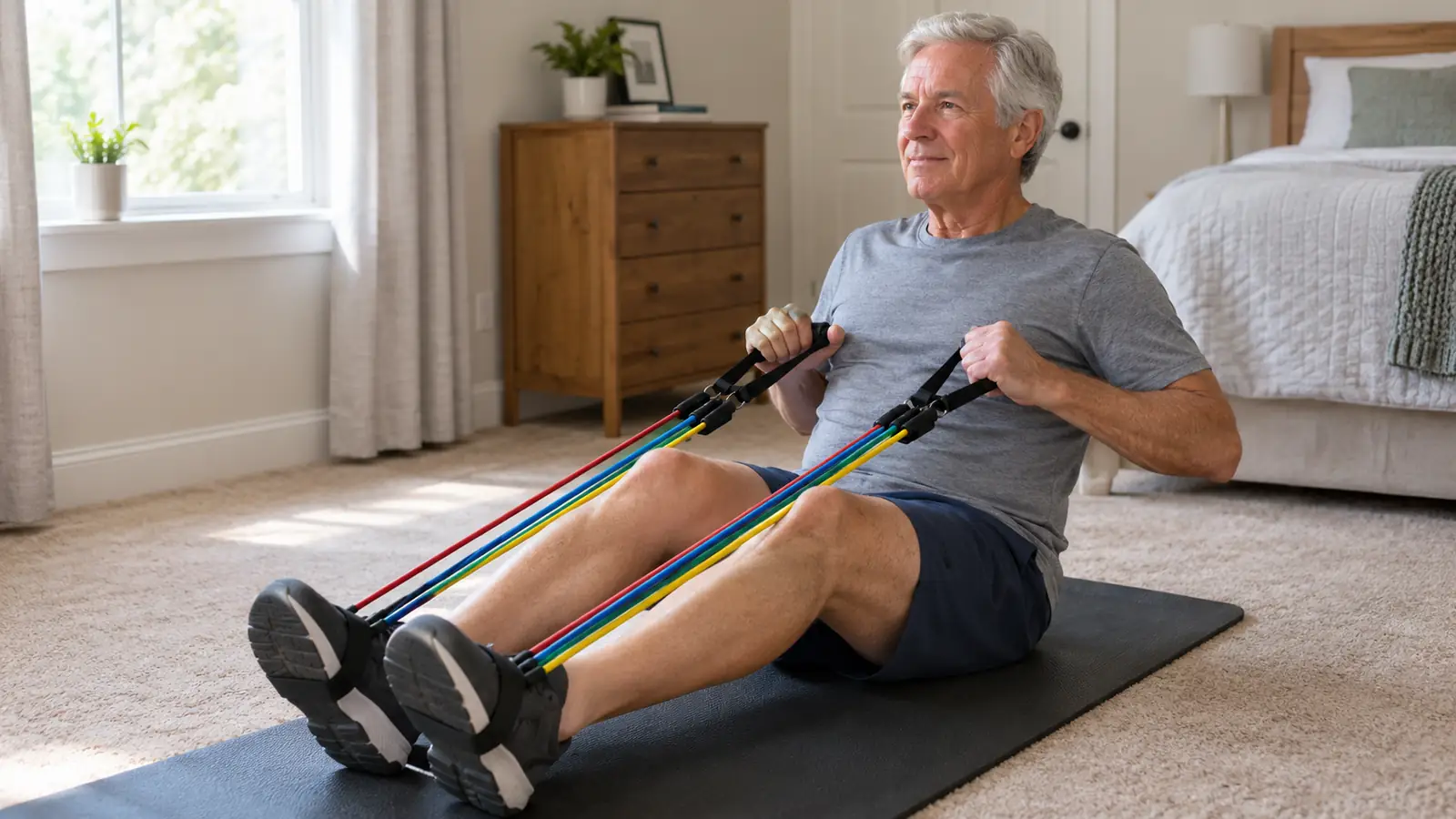
With a dumbbell, the weight is the weight. Either you can lift it or you can't. A band is different: at the start of the movement it's easy, and it gets harder as you stretch it. That gradual curve let me strengthen my knee through its full range of motion instead of avoiding the bottom of a squat or the top of a press. My physical therapist would have approved, and my knee thanked me by clicking less on the stairs. I noticed that within the first month, and it's stayed that way since.
They spare your lower back on hinge moves
My back complains when I bend over a barbell. With a band anchored under my feet, I can do a deadlift-style pull with my spine in a neutral position and the resistance coming from the band, not from the weight of a bar. I still brace my core, but there's less compression on the discs. That's the difference between a movement that helps me and one that leaves me sore for two days. For a guy with a cranky lower back, that's a big deal. I can train my hamstrings and glutes without paying for it the next morning.
You can do a full-body workout in one small room
Our spare bedroom is about 11 by 12 feet, carpeted, with a rubber mat over part of the floor. The bands live in a small pouch. I can do rows, presses, curls, squats, and hip hinges in that space without moving furniture. That convenience is the reason I actually train on the days I don't feel like it. When the gym is twenty feet from the coffee pot, you use it. I've missed maybe three sessions in the past year, and those were days I was genuinely under the weather.
They're easier on the wrists than heavy dumbbells
I have the usual older-guy wrist stiffness. With the WHATAFIT handles, I can adjust my grip so my wrists stay in a neutral position, and the band's resistance doesn't yank on them the way a heavy dumbbell can. Carol noticed the same thing when she tried them. She's 67 and has her own joint grumbles, so that's a real vote of confidence. We both found the handles comfortable enough to use for a full session, and neither of us has had a sore wrist since.
They teach you to control the movement, not just move it
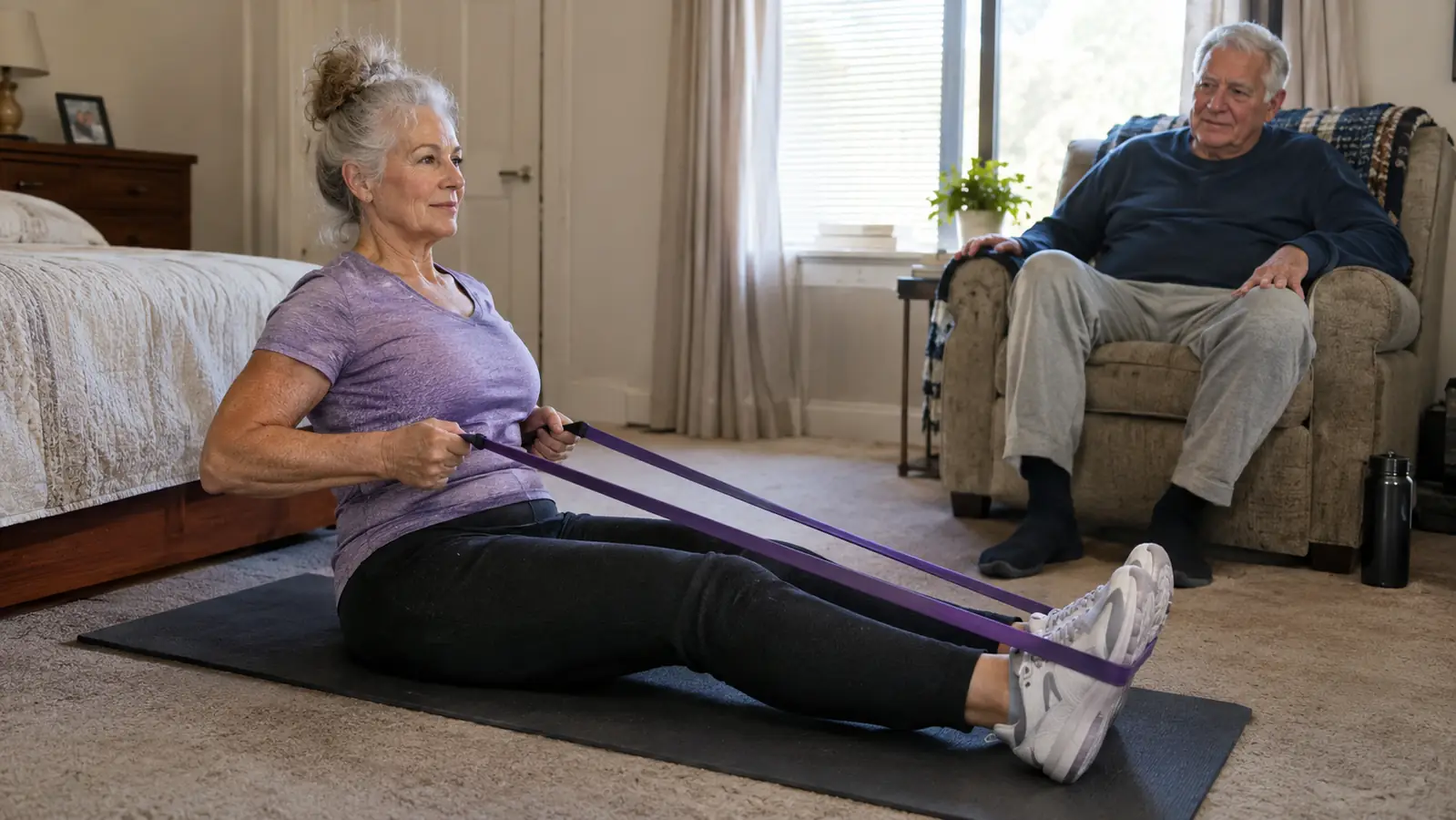
A band punishes you if you rush. The slower you go, the more you feel the tension. That forced me to slow down and actually control the eccentric part of each rep. That control is what builds the kind of strength that keeps you steady on your feet. I noticed the difference when I started going up and down the stairs without holding the rail. My balance isn't perfect, but it's a lot better than it was. Carol says I don't wince when I stand up from a chair anymore.
They make balance work safer
I do a lot of single-leg work now, and a band adds resistance without adding the risk of dropping a weight on my foot. I can hold the band with both hands and step side to side, or do a single-leg deadlift with the band under my foot. If I wobble, there's nothing heavy to catch. That safety is what let me push my balance harder than I would have with dumbbells. It's the difference between trying and not trying, and it's why I've stuck with it.
They're kind to Carol's knees too
Carol, my wife, is 67 and has her own knee grumbles. She uses the bands a couple of times a week, mostly for seated rows and shoulder work. The light band is light enough for her to start, and the medium band gives her a next step without a big jump. It's nice to have gear we can both use without one of us feeling left out. She even reads a paperback between sets sometimes, which tells you the learning curve isn't steep.
They travel, so you don't lose your routine
The whole set weighs almost nothing and fits in a pouch. When Carol and I travel, I pack the bands and a door anchor and keep my routine going in the guest room. That consistency is what's kept my knee feeling better than it did two years ago. Missing a week used to set me back; now I don't have to miss. A door anchor turns any room into a gym, and that's made travel a lot less stressful.
They gave me a way to progress without fear
The best thing about the WHATAFIT set is that there's always a next level: a heavier band, a shorter length, a slower tempo. I never feel stuck, and I never feel like I have to jump to something heavy and risk a setback. That's the whole game for aging joints: keep loading them, but do it in steps your body can handle. I'm 69 now, and I'm stronger than I was at 66. That's the proof that matters, and it's why I'd recommend these bands to anyone my age.
What I'd Skip
If you're looking for a way to get a huge pump or max out a single muscle group, bands aren't the tool for that. They're not a replacement for heavy free weights if you're chasing maximum strength. And if you have a rotator cuff injury or a shoulder that's unstable, I'd clear any band work with your physical therapist first. For what I need, which is building and keeping leg strength so I can stay independent, they've been exactly right. But they're not the answer to everything.
The WHATAFIT bands let me work my legs hard without my knee punishing me for it the next day.
Start where your joints are today
You don't need a gym or heavy iron to rebuild leg strength. A set of WHATAFIT resistance bands, a mat, and twenty minutes a day is how I did it. Talk to your doctor if you're unsure, then start with the lightest band.
Amazon Check Today's Price on Amazon →