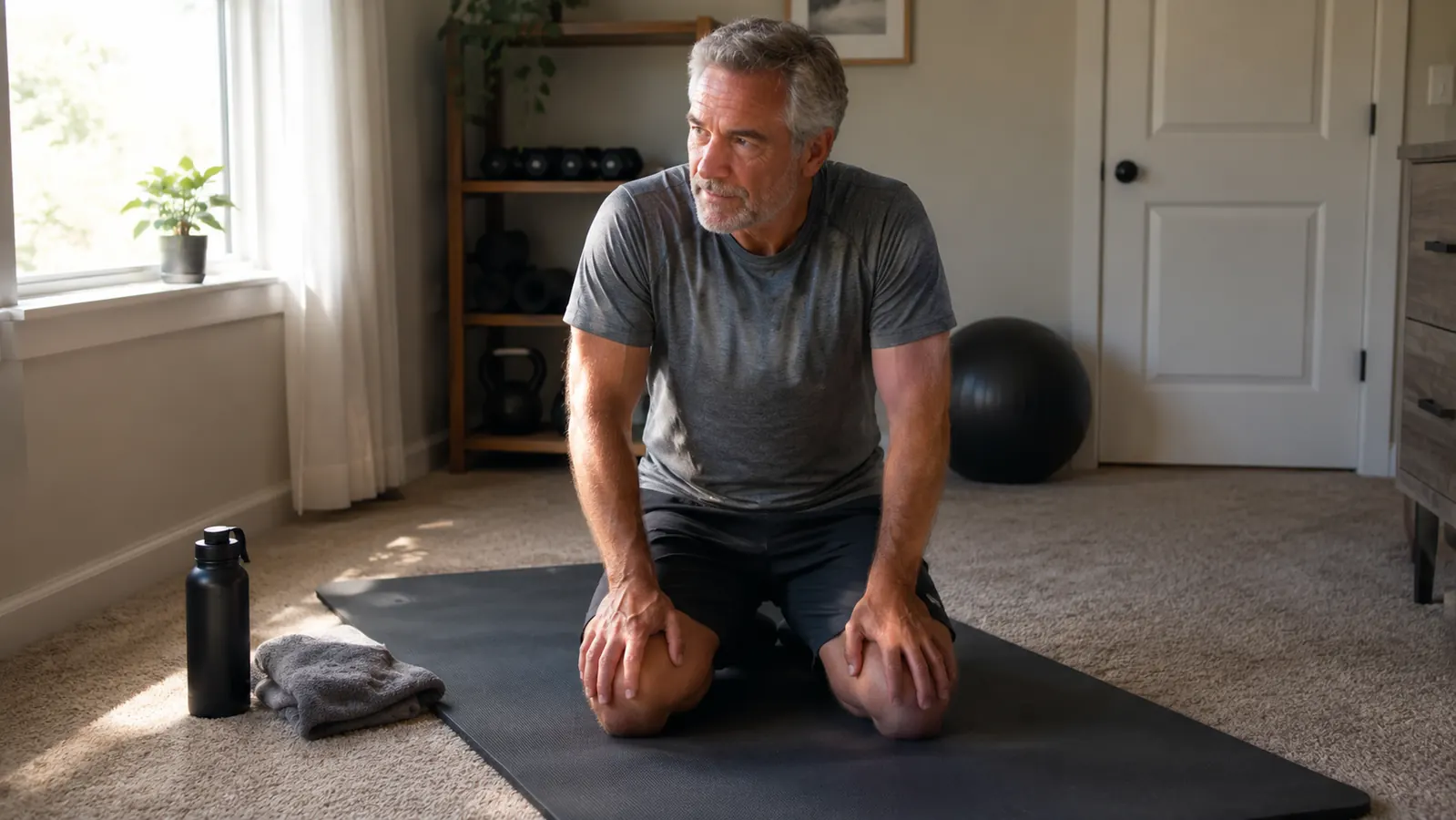
I did not start out shopping for an exercise mat. I started out with a stiff left knee and a doctor who said, in that flat way doctors have, that losing leg strength was the thing most likely to take my independence. That got my attention. So at 66 I cleared out the spare bedroom, laid a rubber mat over part of the carpet, and started doing floor work three or four mornings a week. The floor work was easy to commit to. The floor itself was the problem.
On carpet, a thin yoga mat folds, slides, and bunches up under your knees. My left knee has mild osteoarthritis, and kneeling on a mat that had folded over on itself was a fast way to end a session. I spent my first year and a half of training on cheap thin mats and wore out two of them. Then I ordered the BalanceFrom 1-inch extra thick mat, mostly because it was thicker than anything else I found. It has been in that room for over a year now, and it is the one I reach for every morning.
The Quick Verdict
A thick, stable, no-nonsense mat that has held up to daily floor work on carpet for over a year. It will not win any beauty contests, but it does the job and it keeps doing it.
Amazon Check Today's Price →The mat that ended my thin-mat problems on carpet
After more than a year of daily floor work, this is the mat I would buy again. Check today's price on Amazon and see if it fits your routine.
Amazon Check Today's Price on Amazon →How I've Used It
My routine is not impressive. Three or four mornings a week I roll out the BalanceFrom mat on the carpet in the spare bedroom, which is about 11 by 12 feet. I do knee-to-chest stretches, glute bridges, seated leg raises, and a few balance drills that I stole from the physical therapist I saw after my fall on the porch steps three winters ago. Carol, my wife, joins me a couple of times a week and does her own set on her own mat. Neither of us is training for anything. We are trying to stay steady on our feet and keep the knees and hips moving.
The mat lives on the floor most days, rolled out. That is the real test. A mat that only comes out once a month will look fine. This one gets walked on, kneeled on, and occasionally has a water bottle rolled across it. After a year and a half, the surface still has its texture, the edges lie flat, and I have not found a tear or a permanent dent. I wipe it down with a damp cloth every couple of weeks, and that is the whole maintenance routine.
The one thing I do differently than the instructions suggest is that I do not roll it up after every use. I leave it out on the carpet and move it aside only when we have company. That is probably harder on the mat than rolling it, and it has taken it fine. If you treat it with basic respect, it treats you the same way.
Why Thickness Matters on Carpet
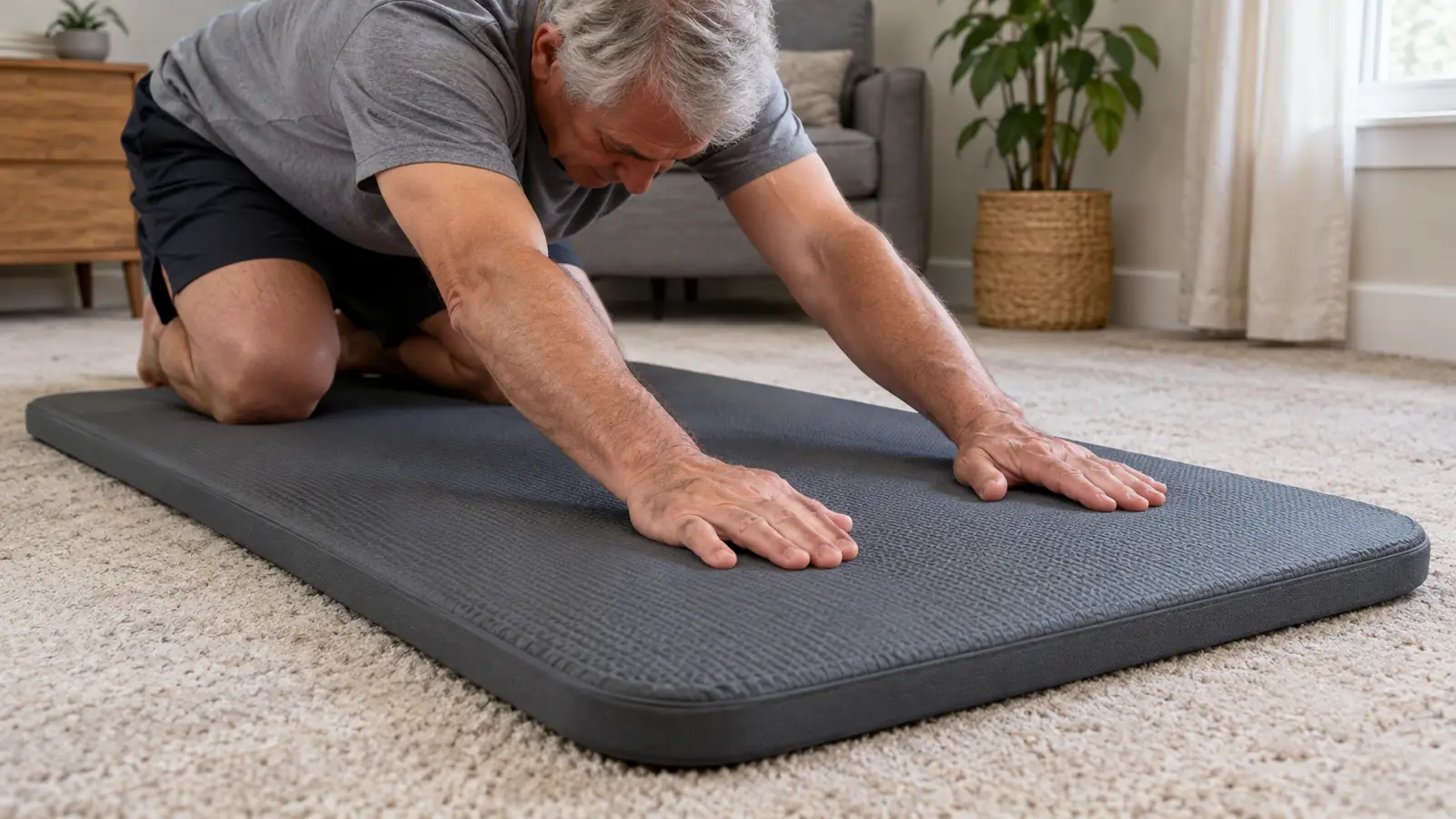
The whole reason this mat works for me is the 1-inch thickness. A standard yoga mat is a quarter of an inch or less. On a hard floor, that is enough for some people. On carpet, it is not. The mat folds, the floor underneath shifts, and your knees end up pressing through to the padding and the hard subfloor below. With the BalanceFrom, the foam is dense enough that my knee does not bottom out. I can kneel on it for a full set of stretches without the old ache starting up in my left knee.
I am not a small man. I carried mail for 31 years and I still have the shoulders from it, even if the knees complain more than they used to. At my weight, a soft mat squashes flat. The high-density foam in this one holds its shape under me, which is the difference between a mat that protects and a mat that only looks like it should protect. When I push up from a kneeling position, the mat does not ripple or slide away.
One honest note: thickness is not the same as softness. This mat is firm. If you want something that feels like a mattress, this is not it. What it gives you is a stable, padded surface that keeps your joints off the floor. For floor work, I would take firm and stable over soft and wobbly every time.
There is a difference between a mat that is thick and a mat that is thick in the right way. The BalanceFrom is dense, not puffy. When I press my hand into it, it gives a little and then stops. That is what keeps a knee from bottoming out. A puffy mat gives and keeps giving until you are on the floor anyway.
How It Holds Up on Carpet
The biggest worry I had before I bought it was sliding. The product name says anti-tear, which is about durability, but what I cared about was grip. Thin mats slide on carpet. This one does not. The bottom surface grips the carpet well enough that I can do glute bridges and planks without the mat creeping toward the wall. The top surface grips my hands and bare feet, which matters when you are sweating a little and shifting your weight.
I have also used it on the rubber mat that covers part of the floor, and it stays put there too. It is not glued down anywhere, and I have never had to chase it across the room. That stability is the quiet reason I kept using it. You do not notice a mat that stays put. You only notice the one that does not.
One thing I checked for was the edges curling up after the mat sat rolled in the closet for a week. It does not. The mat lies flat from the first minute I unroll it, even after being stored for a while. I have also left it in the car on a warm afternoon and it did not warp or soften. That is more than I can say for the cheap mat I bought before this one.
The Carrying Strap and Everyday Details
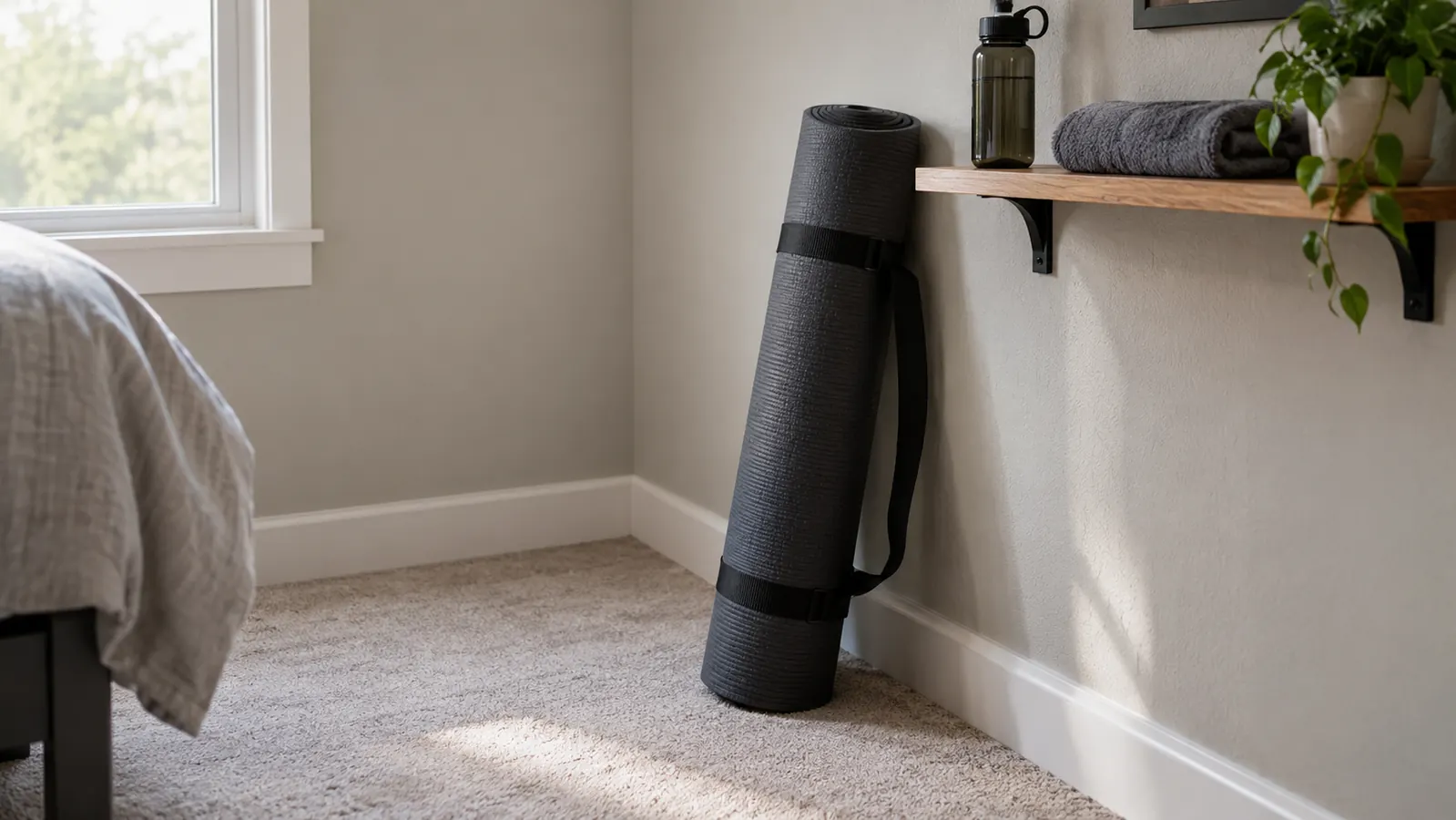
The carrying strap is a simple nylon strap with a buckle, nothing fancy. It does the job. I carry the mat from the spare bedroom to the living room a couple of times a week when I want to stretch while watching the news, and the strap keeps it from flopping open. It also hangs on a hook in the closet, which keeps it out of the way.
Cleaning is easy. A damp cloth and a little dish soap when it gets marked up, then let it dry. The surface does not soak up sweat the way a fabric mat would. I have not had any peeling or flaking of the surface, which is something I did see on one of the cheap mats I tried first. That mat started shedding little bits of foam within a few weeks. This one has not.
I have also taken the mat along when we visit friends, because their floors are all hard tile and my knee complains after an evening of standing in the kitchen. The strap makes it easy to toss in the trunk. It is not a travel mat by design, but it travels fine.
The surface texture is worth mentioning. It is not slick, and it is not rough. It sits somewhere in between, which means my hands do not slip during a plank and my skin does not get rubbed raw during longer stretches. That balance is harder to find than you would think. The cheap mat I started with was slick when I sweated. This one is not.
What I'd Change
If I could change one thing, it would be the firmness. There are mornings when my lower back is grumpy from sitting too long, and a slightly softer surface would feel nicer for the first few minutes. But I also know that a softer mat would squash flat under me and defeat the purpose. So I live with the firmness and I do a couple of extra minutes of gentle stretching before I get into the harder positions.
The other thing I would note is that a thick mat is not the right surface for standing balance work. When you stand on a 1-inch foam mat, your feet sink in a little, and that makes balance drills less stable, not more. I do my standing balance work on the rubber mat that covers part of the floor, and I use the BalanceFrom for everything on the floor. Different jobs, different tools.
A Word on Safety
I am not a doctor, and I am not going to tell you what exercises to do. What I will tell you is what my own doctor and physical therapist said to me: check with them before you start anything new, especially if you have had a fall or you carry a diagnosis like mine. A mat is a piece of equipment, not a treatment. It makes floor work more comfortable, but it does not fix a knee or a back.
If you are new to floor work, start slow. The first week I used this mat, I did ten minutes a day and my body let me know which parts of me had been sitting too long. That is normal. The mat gave me a stable place to work from, and the soreness faded as the routine became habit. Three winters after my fall, I feel steadier on my feet than I did before it.
What I Liked
- 1-inch thickness keeps knees and hips off the floor, even on carpet
- Stays put during floor work, no sliding or bunching
- Held up to daily use for over a year without tears or permanent dents
- Easy to wipe clean with a damp cloth
- Carrying strap makes it simple to move between rooms
Where It Falls Short
- Firm surface, not plush. If you want soft, this is not it
- Heavier and bulkier to carry than a thin yoga mat
- Too thick for standing balance work, in my experience
- Takes up more room rolled up than a standard mat
After a year and a half of floor work on carpet, the mat still lies flat, the edges have not curled, and my left knee does not ache the way it did on the thin mats.
Who This Is For
This mat is for anyone doing floor work at home on carpet or a hard floor, especially if you have knees that complain. If you are over 60 and your doctor has told you to work on leg strength, the way mine did, you will spend a lot of time on the floor. A stable, thick mat makes that time something you can actually do instead of something you dread. It is also a good choice if you are starting out and do not want to think about your equipment. You roll it out, you use it, you roll it up.
If you share a home, it is worth knowing that this mat is quiet. No crinkle, no squeak when you shift weight. Carol does her stretches on her own mat beside it while I read the paper in the chair next to her, and neither of us bothers the other. That matters more than you would think in a small house.
Who Should Skip It
Skip it if you only do standing workouts and never get on the floor. In that case, the thickness works against you. Skip it if you want a plush, cushioned surface for long meditation or restorative stretching; this mat is firm on purpose. And if you plan to carry a mat to a class or the gym every day, a thinner, lighter mat will serve you better.
For my situation, a retiree with a spare bedroom and a stiff knee, it has been the right tool. But the right tool depends on the job. If your job is floor work on carpet at home, the BalanceFrom is worth a look. If your job is something else, buy for that.
One more group: if you already have a thick mat that works, you do not need this one. The gains from switching mats are small. The gains from doing the work are large. Buy the mat that fits your floor and your body, then put the energy into showing up three or four times a week.
If you are doing floor work at home, start with a mat that will not fight you.
The BalanceFrom 1-inch mat has earned its spot in my routine for over a year. Check today's price on Amazon to see if it fits your floor and your knees.
Amazon Check Today's Price on Amazon →